

Generative AI is transforming the way people search. Instead of just showing ten blue links, generative search engines like Bing Chat, Google's Search Generative Experience (SGE), and Perplexity.ai directly answer user queries with synthesized responses – and they cite sources inline. These generative engines blend traditional search with large language models (LLMs) to retrieve information and generate a rich answer on the fly. Users benefit from faster, more comprehensive answers, but website owners face a new challenge: how do you optimize for an AI that writes its own answers? In this post, we'll explore how traditional SEO strategies must evolve into Generative Engine Optimization (GEO) in the age of AI-driven search, drawing on insights from the 2024 KDD research paper "GEO: Generative Engine Optimization" by Aggarwal et al. and other primary sources.
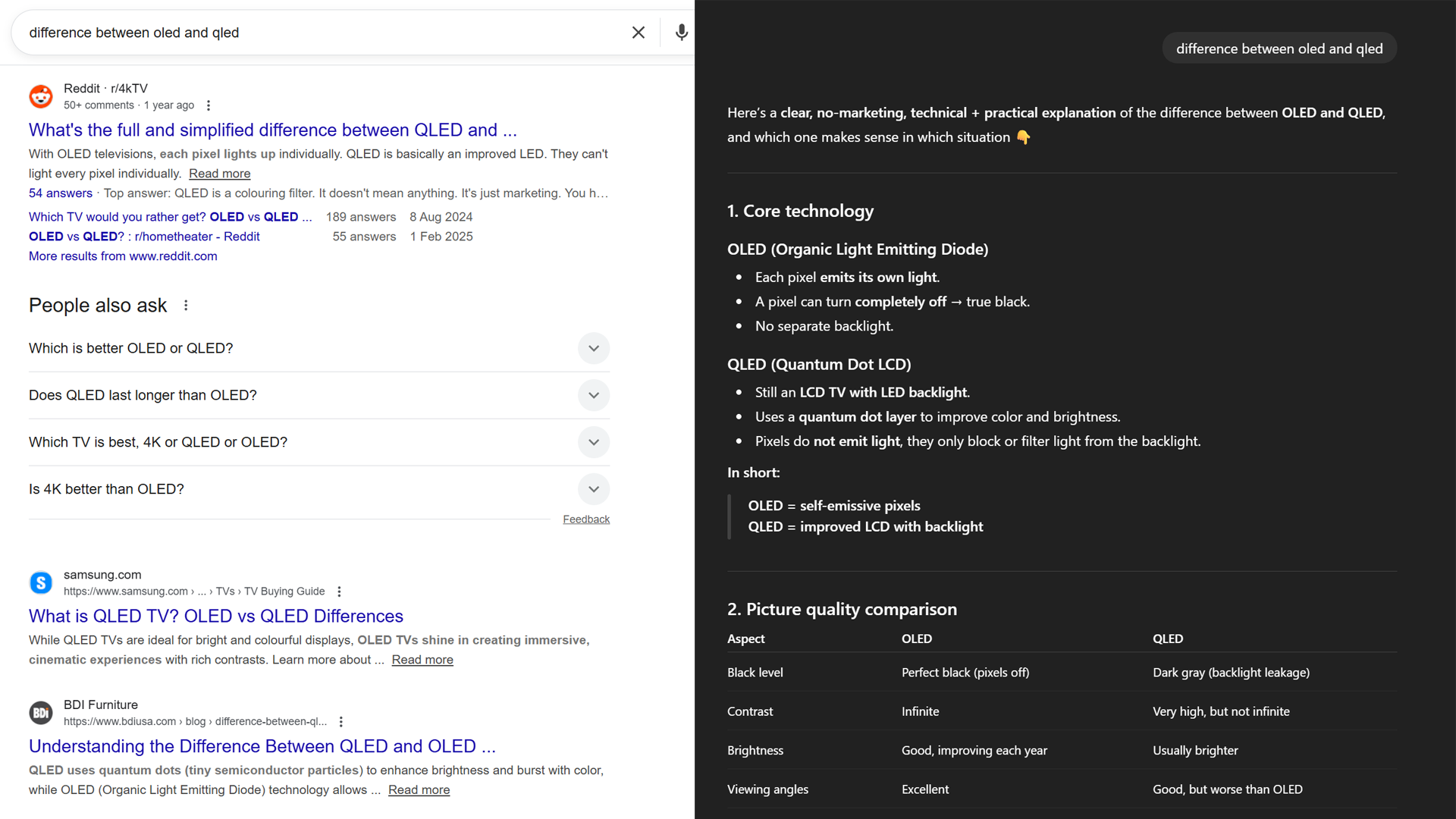
Traditional search returns a ranked list of websites, whereas a generative engine produces a single synthesized answer citing several sources. This fundamentally changes how visibility is measured – it's about being included in the answer, not just ranked highly in a list.
What Are Generative Search Engines?
Simply put, generative search engines are search systems augmented by generative AI. A user enters a query, and the system both retrieves relevant documents and uses an LLM to synthesize a direct answer grounded in those documents. For example, Bing Chat, Google’s SGE, and Perplexity all follow this pattern: they run a conventional web search under the hood, then have an AI model compose a response with references. In contrast to a traditional search engine that only returns links, a generative engine provides an explanatory answer with embedded citations for verification.
This new approach offers convenience to users – information is delivered in a concise, conversational format – but it disrupts the old "click-through" traffic model for websites. Since the AI can summarize content from many sites, searchers may get their answer without ever clicking through to the source. Google's own documentation notes that features like AI Overviews in SGE aim to give users "the gist of a complicated topic or question quickly" while still providing links for those who want to "learn more" developers.google.com. In practice, generative results often fan out a query into sub-queries and pull in a broader diversity of sources than a single search would
developers.google.com. This means even sites that didn't rank #1 might get surfaced as part of an AI-generated answer, if they contain relevant information.
From an SEO perspective, this is a double-edged sword. On one hand, generative AI can surface niche content (since it is not limited to showing just a few top links). On the other, if the AI answer is sufficient, the user might not click any link at all, resulting in a "zero-click" scenario. Microsoft's Bing team has observed that "zero-click visibility" is becoming common: users get what they need from the AI summary itself blogs.bing.com
blogs.bing.com. In other words, your content might influence the user without generating a click. The challenge for content creators is ensuring your site is one of the sources the AI chooses to include – because if you're not in that answer, you're essentially invisible to the user.
Inside a Generative Engine: How Retrieval and Synthesis Work
To adapt our strategies, we need to understand how generative search engines work behind the scenes. A generative engine isn’t a single monolithic AI; it’s a pipeline of components. Here’s a simplified look at the typical workflow (closely resembling Bing Chat’s architecture):
- Query Processing: The user's query is first analyzed by an LLM to break it into sub-queries or to enrich it with context. For example, a complex question like "What are fun things to do in New York City with kids?" might be split into sub-queries (museums, parks, restaurants, etc.) behind the scenes. This is sometimes called query reformulation or query fan-out (as Google calls it)
developers.google.com.
- Document Retrieval: The system then issues these queries to a search index (like Bing or Google's index) to fetch relevant documents. Unlike classic search that matches keywords, generative engines often use semantic vector retrieval to find relevant text even if it doesn't contain the exact query words. For instance, OpenAI's retrieval API uses vector embeddings and can surface a result like "The first lunar landing occurred in July 1969" in response to "When did we go to the moon?" – even though that sentence shares no keywords with the query
platform.openai.com. This works by encoding text into high-dimensional vectors and using cosine similarity to find passages that are conceptually related (not just lexically)
- Ranking and Filtering: The retrieved documents (potentially dozens) are then ranked or filtered. Traditional ranking factors (authority, relevance) still matter for this step, but now there's an additional twist: the engine also considers which passages will be most useful for answering the question. Long documents might be broken into chunks, and only the most relevant chunks are kept (due to the AI's context length limits)
blogs.bing.com. Generative engines prefer content that is easy for an AI to parse quickly.
- Summarization of Sources: Next, an LLM (or several) processes the retrieved text. One approach described in GEO and other research is to have a summarization model generate a concise summary of each source. This can condense a long article into its key points. Some systems might skip explicit per-document summaries and directly feed a selection of excerpts into the answer generator. Either way, the goal is to distill the needed facts from each source while staying within the token limit.
- Answer Synthesis with Attribution: Finally, a response-generating model takes the query and the information from those sources and composes a final answer. Critically, it integrates inline citations or references to the sources it used. An ideal generative engine will ensure every factual statement in the answer is backed by a source. This grounding mechanism is there to reduce hallucinations (making up facts) and to let users verify claims
openai.com. For example, the answer might say: "Start by tasting the city's famous New York–style pizza for breakfast. It's a culinary experience that sets the tone for the day. Then visit Central Park, followed by the Statue of Liberty." (Here the numbers would be linked to citations.) If your site is cited, that is a visibility win – you've made it into the answer.
The above example is adapted from the GEO paper's demo scenario of a "Things to do in NYC" query, where an optimized pizza website moved from a low-visibility mention to a top suggestion in the AI's answer.
In summary, generative search is powered by what the research community calls Retrieval-Augmented Generation (RAG) – the combination of vector-based retrieval (to find relevant info) with LLM-based generation (to produce a fluent answer). Each part of the pipeline, from how your content is indexed as embeddings to how it is quoted in answers, affects whether and how your site appears. Classic SEO ranking signals alone are not enough, because the LLM may choose to use information from any part of a document or even multiple documents to synthesize a single sentence. The process is more holistic and content-aware than keyword-based search: as the GEO researchers put it, “the generative model in generative engines is not limited to keyword matching”. The AI is actually reading (or at least embedding and summarizing) your content, which means writing quality, factual richness, and clarity matter even more.
From Keyword Rankings to “Impressions-in-Synthesis”
With these AI answers in play, the old notion of “rank #1 in SERP” is no longer the sole definition of success. In traditional SEO, we measured visibility largely by rankings and impressions (how often a site appeared on page one, etc.). But for generative search, how do you measure an “impression”? The answer isn’t a simple list of links that we can rank; it’s a synthesized paragraph or two. Thus, GEO: Generative Engine Optimization introduces new visibility metrics tailored to generative answers.
In the GEO framework, an impression for a generative engine means the extent to which a source’s content is present and visible in the AI-generated response. The researchers propose a few ways to quantify this:
- Word Count Contribution: The simplest metric is how many words from the answer are attributable to a given source (normalized by answer length). If a source is cited for a large portion of the answer, it’s getting a higher “impression share.” This is like asking, did the AI use a lot of content from my page?.
- Position-Adjusted Contribution: Not all parts of the answer are equally visible to the user. Text at the beginning of the answer likely has more impact (users read it first) than a citation buried at the end. GEO defines a position-weighted metric that exponentially down-weights words appearing later in the answer. So, a source cited in the first sentence gets a bigger boost than one only cited in the last sentence. This aligns with known user behavior in search results (higher-ranked results get disproportionately more clicks), applied now to answer text.
- Subjective Impression Score: Beyond raw counts and positions, GEO also considers a more holistic measure of visibility using LLM-based evaluation. They call this Subjective Impression, which factors in things like relevance of the citation to the query, how influential or unique the cited information is, and even how likely a user is to click the source. They used GPT-4 to judge these factors for citations in the answer, essentially simulating a human perspective on which sources stand out in the answer. This acknowledges that a citation that adds a crucial insight might be more memorable (and clickable) than one providing a trivial detail.
The shift here is profound: SEO is no longer just about getting to position 1 – it’s about being woven prominently into the AI’s narrative. Your content’s “impression” is the aggregate of how much the AI used it and how salient that usage was. A site could be the second or third citation in an answer and still get significant exposure if a key part of the answer is drawn from it (for example, a bold statistic or a unique tip that the answer highlights). Conversely, even a top-ranked page might get zero visibility if the AI decides not to use it in the answer.
In practical terms, this means content creators need to optimize for inclusion and influence in the AI answer – not just for blue-link ranking. This includes thinking about what information the AI would want to quote or paraphrase. Is your content providing concrete facts, insightful quotes, or authoritative statements that an AI would find useful and credible enough to present to the user? If not, even a high Google rank might not save you from being ignored by the generative layer.
Strategies from “Generative Engine Optimization” (GEO)
How can we adapt content for this new reality? Aggarwal et al.’s GEO paper is among the first systematic studies of this question. They experimented with a variety of content optimization strategies to see which ones increase a website’s visibility in generative answers. Importantly, these are on-page techniques – the kind of changes a content creator can implement without relying on search engines (since generative engine algorithms are largely proprietary black boxes). Here are the key GEO techniques tested, and how they fared:
- Keyword Stuffing (Classic SEO): Increase the frequency of the query keywords in the content (a throwback to old-school SEO). Result: Not effective. In fact, it tended to hurt generative visibility. In one test with Perplexity.ai, keyword stuffing made a site’s impression score 10% worse than baseline. The AI already understands context; redundant keywords don’t make it more likely to use your content, and could even make the text seem spammy or less informative.
- Authoritative Tone: Rewriting content to sound more authoritative and persuasive. The hypothesis was that a confident, expert tone might be favored. Result: Mild positive effect. A more authoritative style showed some improvement in visibility (though not as much as other methods). This suggests that clarity and confidence in writing can help the AI regard the content as a useful source, but it’s not a game-changer alone.
- Easy-to-Understand Language: Simplifying the language and explanations. Since an AI has to quickly digest the content, making it more straightforward could help. Result: Also a modest positive effect. Content that is easier to read and free of convoluted jargon may be more readily utilized by the LLM. This aligns with Bing's guidance that if information is not easily interpreted by the AI, key details may be missed
- Fluency Improvements: Polishing the text for grammar and flow. Similar rationale to above – a well-written paragraph might be parsed more reliably by the AI. Result: Modest effect. Certainly worth doing as a best practice, but not a standout factor by itself.
- Unique Words Addition: Adding more distinctive or rare terms (perhaps to stand out or cover related concepts). Result: Not a major factor by itself. It may help slightly if those unique terms align with how the AI diversifies answers, but there’s no strong evidence it moves the needle much on visibility.
- Technical Terms Addition: Injecting more technical or domain-specific jargon. Result: Also not particularly impactful on its own, except where those terms are exactly relevant to the query domain. Overuse might even confuse or dilute the content’s main points.
- Cite Sources (Add References): Embedding citations to external authoritative sources within your content. For example, referencing a reputable study or source with a footnote or link. Result: Significant positive effect. Content that explicitly cites credible sources tended to be viewed as more trustworthy and comprehensive by generative engines. By quoting or linking a reliable source, your page might effectively inherit some authority, which the AI can detect. In the GEO experiments, adding citations to external sources improved visibility notably, likely because the AI’s answer can incorporate those citations (showing your site referencing another) – which makes your site part of a richer answer context. It’s a bit meta: if your page already has a citation to, say, a government report, the AI might include that fact and cite your page as the vessel that carried it. This strategy boosted both the objective and subjective impression metrics in GEO’s tests.
- Quotation Addition: Inserting relevant quotes from other experts or sources into your content. For instance, adding a well-phrased sentence from a subject matter expert or a line from a famous document, enclosed in quotation marks. Result: One of the most effective strategies. GEO found that Quotation Addition produced large gains in visibility – up to ~40% improvement on their primary metric. Why do quotes help so much? Likely because they provide the AI with easily extractable, context-rich material to use in an answer. A quote stands out as a self-contained nugget of information. The generative model can directly include a quote in the response (which users tend to trust, as it appears like a cited testimony or evidence) and attribute it to your site. In domains like history, journalism, or “People & Society” topics, GEO noted quotation addition was especially effective – those are contexts where a poignant quote can really enhance an answer. By adding a few choice quotations from relevant authorities into your article, you increase the chance that the AI finds something worth quoting (and thus citing you).
- Statistics Addition: Incorporating concrete statistics or numerical facts into your content (ideally with references). For example, instead of saying “many people visit Central Park,” say “42 million people visited Central Park in 2019” (with a source). Result: Highly effective. Like quotations, adding statistics gave a big boost – also on the order of 30–40% improvement in visibility in GEO’s benchmark. Stats provide factual hooks that the AI loves to pull into answers. Users often ask questions that seek quantitative answers (“how many, how much, how long”), and even for general questions, a well-placed stat makes an answer feel informative. The GEO study observed that certain categories (e.g. law, government, finance) particularly benefit from statistics addition, likely because those queries crave data. By peppering your content with relevant stats, you’re giving the AI answer generator juicy, verifiable details to include. When it does include them, your site gets the citation.
It’s worth noting that the most successful approaches in GEO are those that enrich the content with verifiable, specific information – things that lend credibility and depth: external citations, direct quotes, hard numbers. In contrast, legacy SEO hacks like keyword stuffing, or superficial style tweaks, did little or even backfired. This indicates a shift in optimization philosophy: AI-driven search rewards content quality and referenceability, not keyword games. The GEO authors conclude that their best strategies improved a site’s visibility in AI responses by up to 40% on average across thousands of queries – a huge gain. They even tested these on a live system (Perplexity.ai) and saw substantial improvements (22–37% on key metrics) there as well, reinforcing that these techniques generalize to real-world generative search engines.
Figure: Generative Engine Optimization strategies that injected useful content (quotes, stats, sources) dramatically outperformed old SEO tactics in tests. Keyword stuffing, for example, _underperformed a no-optimization baseline in AI answers, whereas adding quotations and statistics led to double-digit percentage gains in visibility. The takeaway: enrich your content with knowledge, not keywords._
Finally, GEO found that combining strategies can have an additive effect. For example, making language more authoritative and adding stats and adding quotes could together maximize visibility (though diminishing returns can occur if the strategies overlap). Different query domains also respond better to different techniques – e.g. an “explainer” query might benefit hugely from an illustrative quote, while a “comparison shopping” query might benefit more from stats and structured data. This implies that content creators should choose optimization tactics that fit their niche and audience intent.
Technical Foundations: Vectors, Tokens, and Grounding (What SEOs Should Know)
It’s not every day that SEOs need to think about vector math or language model context windows. But in the age of generative search, a little technical understanding goes a long way in shaping strategy. Let’s demystify a few key concepts:
- Semantic Vector Retrieval and Cosine Similarity: Unlike classic search, which largely matches keywords, generative systems often represent text as numerical vectors using embeddings. These are high-dimensional representations of meaning. The engine finds relevant documents by searching for vectors near the query's vector in that space. Cosine similarity is the common measure used: it effectively gauges the angle between two vectors (where 1.0 means identical direction and 0 means orthogonal). In practice, this means your content can rank for queries even if they don't share keywords, as long as the meanings align. Example: OpenAI demonstrated that for the query "When did we go to the moon?", an embedding search correctly brings up text about the 1969 lunar landing (which has 0% keyword overlap, but a high semantic similarity of 65%)
- Retrieval-Augmented Generation (RAG): This is the framework behind generative search. It means the model isn't all-knowing on its own (it has limited training data and memory), so it augments itself by retrieving fresh or specific information when needed. For instance, ChatGPT with the browsing plugin or Bing Chat will perform a web search, gather snippets, and then generate an answer. The important thing here is that the quality of the final answer is bound by the quality of retrieved data. If your content is retrieved, it becomes part of the model's "knowledge" for that query. If not, it might as well not exist to the AI. RAG also implies that being indexed and accessible to the engine is step one – basic SEO indexing hygiene still applies. (Google's SGE will only show content that's indexed and eligible for search
- Token Limits and Chunking: Large language models have a context window (the number of tokens of text they can handle at once). This can range from a few thousand tokens in older models to tens of thousands in newer ones. Still, it's finite. When an engine retrieves documents, it often can't feed entire long articles into the model – there's a truncation or chunking process
- Grounding and Citations: "Grounding" refers to the AI model tying its statements back to source material, to avoid hallucinating. We touched on how generative engines embed citations in answers to build trust. As a content provider, you want to play into this mechanism. Whenever possible, write factual statements that beg to be cited. If you have original data or a strong claim, highlight it – the AI might just use that sentence verbatim with a citation. Also, providing references (as mentioned in Cite Sources strategy) not only boosts your credibility to human readers, but potentially to the AI. There's emerging evidence that LLMs evaluate the trustworthiness of text in part by the presence of supporting evidence. OpenAI's own plugin documentation mentions that connecting an LLM to external data with references helps users "assess the trustworthiness of the model's output and double-check its accuracy"
In essence, successful optimization for generative search requires thinking like the AI: How will it find my content (semantic vectors), can it easily digest my content (clear writing, chunkable structure), and will it view my content as authoritative and useful (grounded facts, references, unique insights)?
Staying Visible: Best Practices for Content in the Generative AI Era
Now we turn these insights into concrete advice. What should content creators and SEO professionals do to remain visible as search goes generative? Here are key strategies, grounded in the research and official guidance:
- Enrich Your Content with Facts and Nuggets: Make sure your pages contain the kind of specific, valuable information that an AI would want to include in an answer. This means adding statistics, dates, names, definitions, and other concrete details wherever relevant. If you have an opportunity to include a compelling quote from an expert or a primary source, do it. These elements act like magnets for the generative model’s attention. In experiments, pages augmented with relevant quotes and stats saw up to 40% higher inclusion in AI answers. Think of it this way: in a sea of generic text, a sentence that says “According to the FAA, approximately 45,000 flights take off every day in the US.” is going to stand out to an AI as something worth reporting to the user.
- Maintain Clarity and Structure: Write in a clear, organized manner with descriptive headings and logical flow. Break up content into sections that each cover a subtopic. Use lists or tables for structured information when appropriate (for example, a comparison table of product features). Google's Search Central guidelines note that structured content like schema-marked FAQs and tables can help AI systems interpret and summarize your content more effectively, increasing your chances of being cited in an AI-generated answer
- Leverage Semantic SEO (Topics over Keywords): Shift your mindset from exact keywords to topic coverage. Because generative engines use semantic similarity, it’s vital to cover the breadth of a topic and related concepts. Perform entity-based optimization: identify the key entities (people, places, things, ideas) related to your topic and include relevant information about them. This increases the odds that, whatever way a question is phrased, some part of your content will semantically align with it. For example, if you have a page about New York pizza history, don’t just repeat “NYC pizza” everywhere (keyword stuffing won’t help); instead, enrich it with entities and context: mention famous pizzerias, link it to general NYC history, include a quote from a famous chef, etc. That way, whether the query is “history of New York pizza,” “why is NY pizza famous,” or “best pizza cultural heritage NYC,” the engine finds relevant vectors in your content. Use tools like content outlines or NLP APIs to ensure you’re covering related terms and questions comprehensively.
- Provide References and Sources: This is somewhat counterintuitive – why would you send people to other sources? But as discussed, including citations to authoritative references within your content can boost your credibility in the eyes of AI. It’s analogous to academic writing: a paper that cites solid sources is taken more seriously. If you have a medical article, cite the research or official guidelines. If you mention a fact, consider linking the source (unless it’s something universally known). These outbound links might also help traditional SEO slightly, but here our focus is on the AI. A generative engine might incorporate your cited fact and end up citing your page as the source of that fact in the answer, because it was your page that the user would click (your page contains the reference and additional context). Essentially, you become a trusted intermediary for that information. This technique was shown to significantly improve visibility in GEO’s experiments. Just ensure the sources you cite are high-quality and relevant – it won’t help to cite something off-topic or non-credible.
- Optimize for the Answer Snippet Level: Traditional SEO often focuses on the page as a whole. For generative AI, think in terms of answer snippets. Ask yourself: If a user asked a question that my page can answer, what specific snippet of my text would likely be used? Once you identify that, make that snippet excellent. For instance, you might create a short paragraph that directly answers a common question (which doubles as a featured snippet for normal SEO). Use the question in a heading and answer it clearly right below. Even if Google’s SGE or Bing doesn’t use it verbatim, it increases the chance the model will pick up the key points. Also, put important information earlier on the page when possible. The GEO paper’s position-adjusted metric implies that being cited earlier in the answer is more valuable. If your page contains a critical fact but it’s hidden in the last paragraph, the AI might still cite you but possibly later in its answer (or not at all if it runs out of space). Front-load important content.
- Technical SEO is Still Table Stakes: Make sure your content can be found and indexed in the first place. Follow Google's and Bing's guidelines for allowing crawling, using proper HTML text (not embedding key info only in images), providing sitemaps, etc. Google has stated that there are "no additional technical requirements" to appear in AI overviews beyond normal indexing and snippet eligibility
searchengineland.com. If Bing is showing your content in chat results (even if zero-click), that counts as an impression. Use those analytics to gauge how you're performing in the generative context. If you see impressions but low clicks, that might mean users got their answer from the AI text – a sign that maybe you need to offer something more to entice the click (like a unique insight beyond what fits in the AI summary).
- Focus on Trust and Accuracy: Generative AI can amplify the impact of misinformation, so the systems tend to be conservative about which sources they trust. In their ranking of retrieved sources, authority and accuracy are paramount. As a content creator, double down on your E-E-A-T (Experience, Expertise, Authoritativeness, Trustworthiness) signals. This includes having author bios, citing sources (again), keeping content updated, and aligning with what reputable sources say (or providing evidence when you diverge). If an LLM is choosing between quoting your site and quoting, say, Wikipedia or a government site, it will pick the one that seems more reliable unless yours has something uniquely valuable. Building topical authority (covering a subject extensively across your site) can also help your content be seen as a go-to source. From a technical angle, ensure factual accuracy in your content; AI might cross-check your statements against other sources. If you have erroneous info, the AI may simply ignore your site in favor of one with the correct info. In the worst case, if your content caused an AI to give a wrong answer, it could be downgraded in future (though today’s systems likely handle that by preferring multiple sources for confirmation).
- Use Schema Markup for Key Facts: Although not explicitly covered in the GEO paper, using structured data (Schema.org) is a wise move. Mark up facts like dates, ratings, prices, FAQ questions, etc., with appropriate schema. Google's AI features have been known to draw on structured data – for instance, SGE might show a product's specs or an FAQ answer right in the AI response. Microsoft mentions that structured content such as schema-marked product pages and FAQs helps AI systems summarize content more effectively
- Monitor and Adapt: We are in early days of generative search. Keep an eye on how often your site is appearing as a cited source. Currently, you might manually check Bing Chat or SGE for queries important to you and see which sites are being cited. If it's not you, analyze those sources: what about their content got them chosen? Is it the depth, the presence of a particular fact, the way it's written? Bing's November 2025 webmaster blog noted that content teams should track "new engagement signals that reflect influence, trust, and readiness to convert" in AI experiences
- Continue Creating People-First Content: Google has repeatedly said that their fundamental advice doesn't change with AI in search – content that is helpful, people-first, and high quality remains the north star
The Future: SEO to GEO and Beyond
We are witnessing a paradigm shift from Search Engine Optimization (SEO) to what researchers are calling Generative Engine Optimization (GEO). In the future, we can expect SEO practitioners to routinely consider how their content might be consumed and presented by AI systems. This might lead to new tools and techniques: for example, content auditing for LLM readability, or widgets that show how an AI might summarize your page. We may also see search engines provide more feedback – Bing is already giving webmasters data on chat impressions, and one can imagine Google doing the same if SGE becomes mainstream. New metrics (like the “impression” definitions in the GEO paper) could become part of SEO reporting dashboards, measuring not just whether you appear, but how you appear in AI answers.
The GEO research also hints at domain-specific strategies. Content optimization might not be one-size-fits-all; it could depend on the category. A recipe site might find success by adding more user testimonial quotes (“This cake was ‘the best I’ve ever had,’ one user raved”), whereas a finance site might focus on up-to-date statistics and references to official data. As SEO experts, we’ll need to tailor our approaches in a more nuanced way for each niche, considering the kinds of answers AI might generate for those topics.
Another consideration is the evolution of the AI models themselves. The GEO paper notes that as language models get larger context windows and better retrieval capabilities, they might ingest more sources for each answer. This could mean even more competition (the AI might pull from 20 sources instead of 5, diluting each source’s share) or, optimistically, more opportunities for a wider variety of sites to be included. It also means that some aspects of classical SEO, like being on the first page, might matter less if the AI is reading beyond page one of results to compose an answer. Instead, what matters is having the content that satisfies the information need most directly.
For content creators, the core challenge remains: make content that serves users. The difference now is that your audience has expanded to include AI readers. You’re writing for humans, but you also have to write for an AI intermediary that decides what the human sees. In practical terms, writing for the AI means being explicit, factual, and unambiguous about the value you provide. If you are an authority, let it show (back it up with evidence and clear statements). If you have a unique perspective, highlight it as a quotable insight.
Finally, it’s important to keep ethics in mind. The GEO paper referenced another study where authors found it possible to manipulate LLM outputs with adversarial inputs. There will undoubtedly be black-hat attempts to game generative engines (for instance, by stuffing pages with hidden relevant text or by creating content meant solely to trap the AI into quoting it). However, those approaches will likely be short-lived or detected. The long-term sustainable approach is the same as it ever was: provide real value. Generative AI, for all its sophistication, is ultimately trying to channel the most useful content to users. If you consistently produce that content, you stand to gain visibility, whether through traditional search snippets or AI-generated summaries.
In conclusion, the age of generative search is an inflection point for SEO. It challenges us to transcend old tactics and truly align content with informational needs. Those who adapt – by enriching their content, embracing new metrics, and focusing on substance over shortcuts – will find that optimization in this new era is not about tricking an algorithm, but about collaborating with an AI to better serve the end user. That is SEO evolved: not just optimizing for search engines, but for the generative engines that are rapidly becoming the new gateway to information. The game has changed, but the mission of delivering great content remains, now with a generative twist.