
AEO vs GEO vs LLMO: More Than Just SEO in the AI Era
Understanding the differences between Answer Engine Optimization, Generative Engine Optimization, and Large Language Model Optimization – and how they work together in modern SEO.
 Sebastian Kraus
In 2026, people don't just click on search results – they ask AI tools and expect instant answers. In fact, over half of Google searches end without a click, thanks to features like answer boxes and voice assistants. That's why marketers talk about AEO (Answer Engine Optimization), GEO (Generative Engine Optimization), and LLMO (Large Language Model Optimization). Each term describes a way to make your content show up in AI-driven answers. In short, AEO makes your page the direct answer (think featured snippet or voice answer) , GEO makes AI systems trust and cite your in-depth content, and LLMO makes sure chatbots (like ChatGPT or Gemini) know your brand and include it in their answers. These aren't three separate channels – they're layers of modern SEO that overlap.
What is AEO?
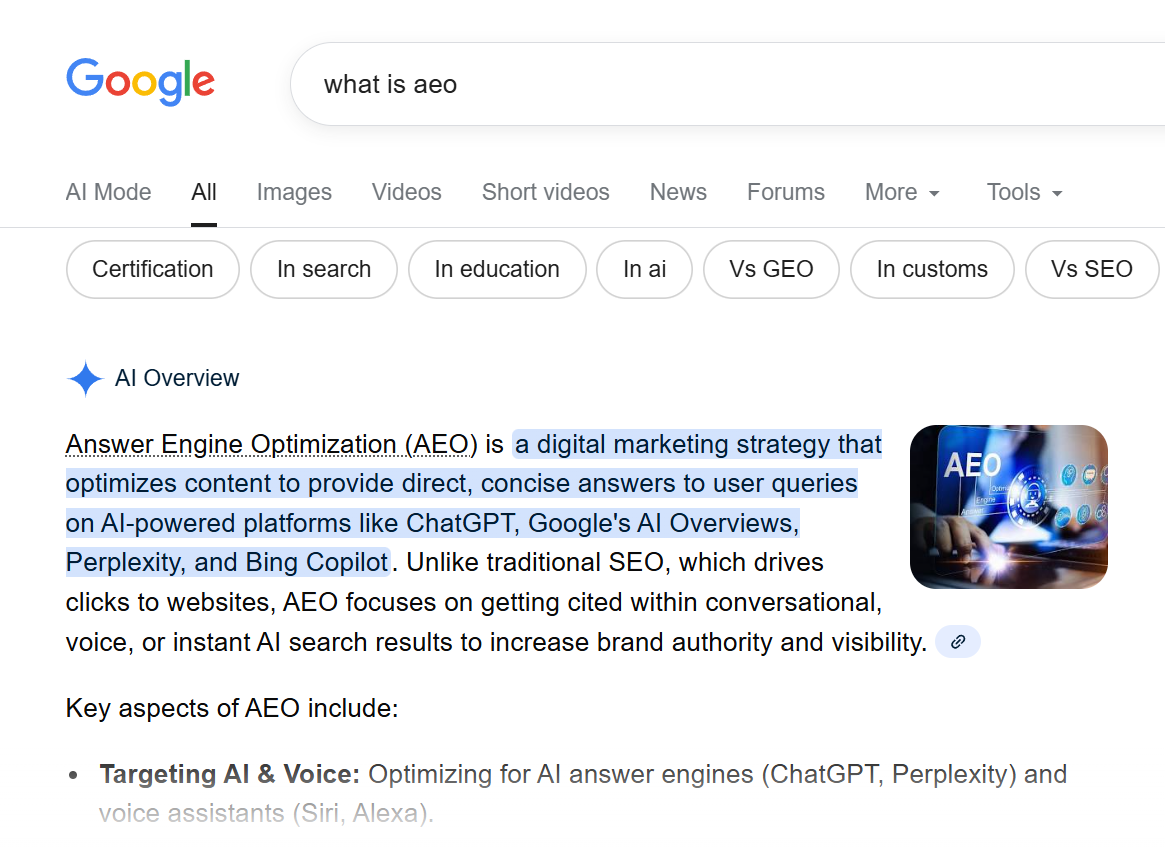
A Google result showing a featured answer box for "What is AEO?" (Answer Engine Optimization).
Answer Engine Optimization (AEO) is about making your content the quick answer that search platforms give. Instead of focusing only on ranking links, you format content so engines can extract a perfect response. For example, if you Google "What is AEO?", you might see a box (featured snippet) with a concise answer (like the image above) brainz.digital. AEO content is usually very structured and concise – think a short definition, bullet list, or simple steps right under a clear heading. The goal is to hit that "position zero" answer box or be read aloud by Alexa/Google Assistant. In practice, that means writing in an answer-first style with clear headings, lists or FAQs so AI and search engines can easily grab and display your answer
brainz.digital. This helps your brand get the credit even if the user never clicks through to your site.
What is GEO?
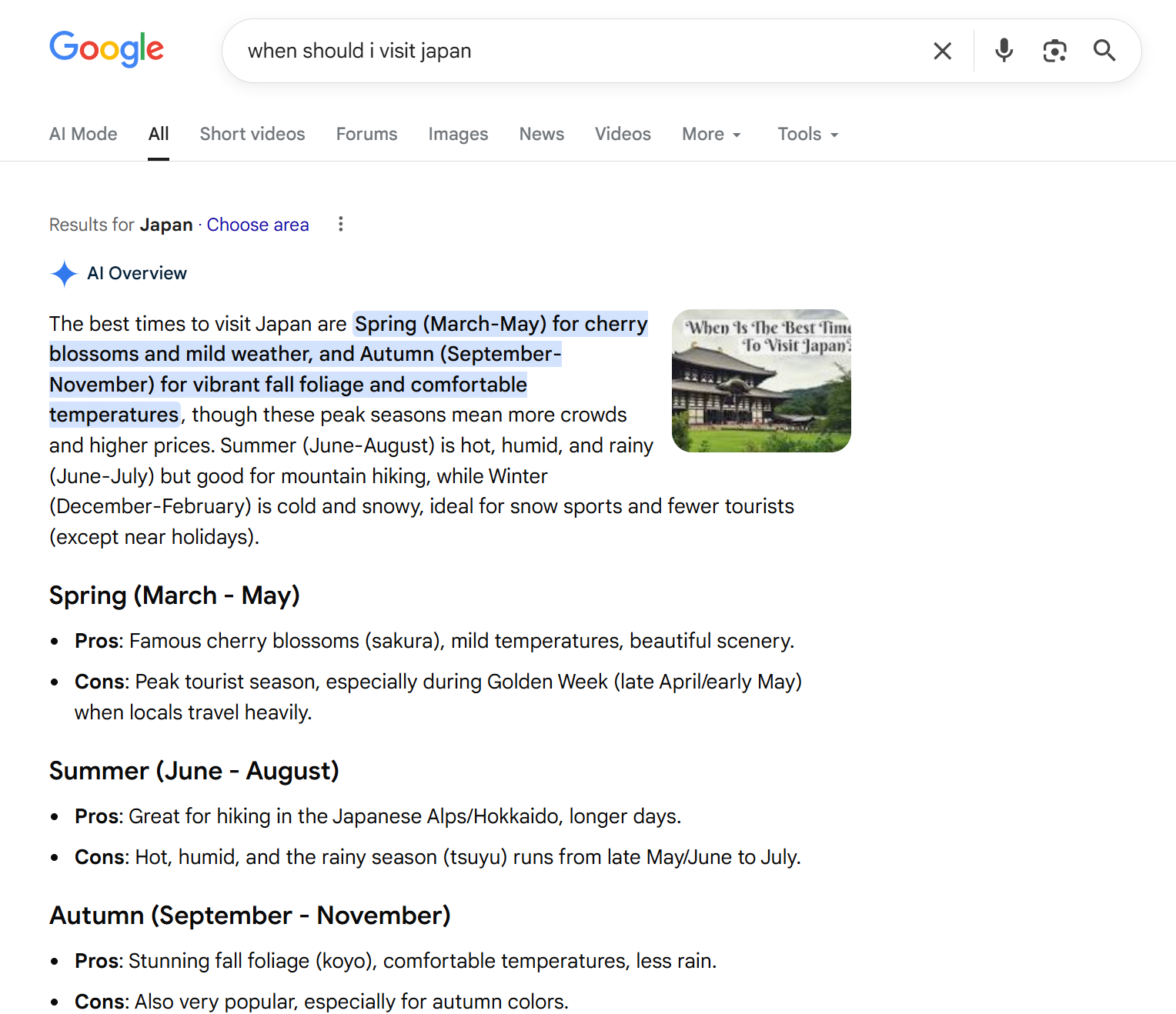
Google's AI Overview for "When should I visit Japan?" – a generative summary that pulls from multiple sources.
Generative Engine Optimization (GEO) is about making your content a trusted source for AI-powered summaries. With GEO, you write deep, comprehensive content that AI overviews (like Google's SGE or other answer engines) will cite and summarize. For example, Google's AI Overview for "When should I visit Japan?" bundles information from many sites (as shown above). If your article on that topic is thorough, up-to-date, and authoritative, the AI is more likely to draw from it. In other words, GEO isn't about a quick one-line answer – it's about proving your expertise. You include research, examples, and clear explanations so that when an AI tool builds a complete answer, it sees your content as reliable and worth quoting directiveconsulting.com. Essentially, GEO expands SEO's reach: instead of just ranking on a search page, your page becomes part of the answer that AI generates.
What is LLMO?
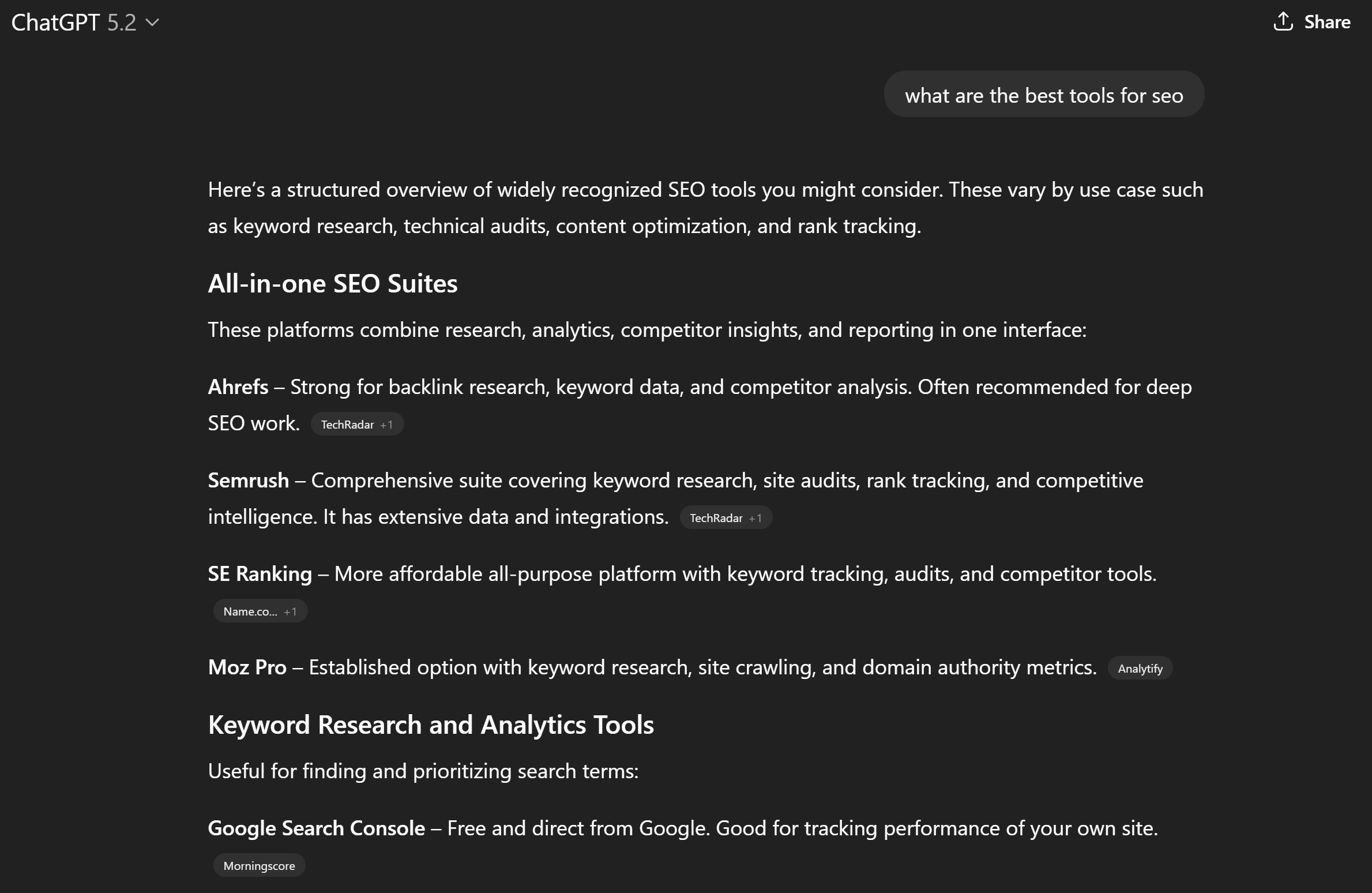
A ChatGPT answer listing recommended SEO tools and citing sources.
Large Language Model Optimization (LLMO) focuses on making AI chatbots (like ChatGPT, Gemini, Claude) aware of your brand and content. It means structuring your content and metadata so these models recognize your name and facts and use them in their long-form answers. For example, asking ChatGPT "What are the best tools for SEO?" returns a list of recommended tools with descriptions and citations (as shown above). LLMO is the effort you put into being one of those sources. This involves clear, consistent branding and terminology across the web – the same names, titles, and descriptions on your site, social profiles, and directories promarketer.ca. Because AI models cross-check many places at once, consistency is key: if your brand story or product names are different on different pages, the AI might get confused. By keeping your "about us," product labels, author bios, and structured data uniform, you make it easier for the AI to link your content together. That way, your brand gets credited in chatbot answers. In short, LLMO is about shaping how AIs remember you – so your business shows up in AI answers and recommendations.
How They Compare and Work Together
AEO, GEO, and LLMO each target different parts of the AI-powered search landscape, but they overlap:
- Search Intent: AEO answers direct questions (“how to,” “what is,” etc.) immediately. GEO handles broader, research-style queries where users want context. LLMO deals with open-ended chatbot prompts (like “explain X in detail”) and brand-related queries.
- Where You Appear: AEO-optimized content can earn featured snippets, “People Also Ask” answers, and voice assistant responses. GEO-optimized content gets cited in AI Overviews or generative answer blocks on search results. LLMO gets you mentioned or linked in AI chatbot responses and AI-generated summaries.
- Content Style: AEO content is very concise and skimmable (short definitions, FAQ sections, bullet points) to be easily extracted by AI. GEO content is long-form and rich (in-depth articles, whitepapers, detailed guides) to establish expertise. LLMO content uses consistent terms, clear branding, and often structured data (schema) so AI models can parse and pick it up.
In practice, these blend together. Writing clear, answer-first sections (an AEO tactic) helps your content get picked up by AI systems in general blog.hubspot.com. Adding expert quotes, data, or sources (a GEO tactic) makes AIs more likely to trust and cite your page
directiveconsulting.com. And maintaining consistent entity information (an LLMO tactic) helps every AI tool – from search engines to chatbots – correctly attribute the information to you
promarketer.ca. Think of it as building one strong content strategy that works on all fronts: clear answers for immediate questions, depth for AI research, and consistency for brand mentions.
How to Cover All Three
You don’t need three completely separate plans. Here are key steps to make your content work for AEO, GEO, and LLMO at once:
- Keep SEO fundamentals strong. A fast, mobile-friendly site with good navigation, clear URLs, and solid internal links lays the groundwork for any visibility
neilpatel.com. These basics help search engines and AI tools find and crawl your content reliably.
- Structure for answers. Put the main answer up front with clear headings and lists. Use short paragraphs, FAQs, or bullet points to make your key points obvious
brainz.digital. AI engines favor content where the core response is easy to extract, so an "answer-first" format helps both search snippets and chatbot answers
blog.hubspot.com.
- Add depth and expertise. After giving the quick answer, follow up with detailed sections, examples, and data. Cite sources or studies if possible. This depth signals credibility. Generative AI tools look for authoritative content to quote, so thorough explanations and up-to-date info make them more likely to pull from your page
directiveconsulting.com.
- Reinforce your brand and entities. Use consistent terminology for your brand, products, and people everywhere. Employ schema markup (Organization, Person, Product, etc.) so AIs understand your site structure. Keep your "About" pages, author bios, and descriptions uniform across the web. Consistency builds trust with AI: the same name or definition in many places tells the model it's correct
promarketer.ca. This makes it easier for chatbots to associate answers with your brand.
Each of these steps serves all three strategies. Together, they make your content clear to humans and machines. The result: your site can rank as a search result, be selected for Google’s AI Overviews, and be cited in ChatGPT answers.
Conclusion
AEO, GEO, and LLMO aren't rival strategies – they're extensions of SEO for the AI age neilpatel.com. In practice, you don't choose one "channel"; you create content that ticks all the boxes. Structure pages for quick answers, go deep enough to earn AI citations, and keep your brand details crystal clear. Do that, and your content will perform across search engines, AI answer panels, and chatbots alike
neilpatel.com
brainz.digital. In other words, one smart, unified approach covers it all: you get visibility whether people are scanning Google's links, reading a generative summary, or chatting with an AI assistant.
Sources: We've drawn on industry research and expert guides to explain these concepts brainz.digital
directiveconsulting.com
promarketer.ca
neilpatel.com, combining definitions and examples to show how AEO, GEO, and LLMO fit into modern SEO. By following these principles, marketers and content creators can make sure their work gets seen wherever people look for answers.
Sources

Founder of VecDoor, passionate about AI visibility and generative engine optimization. With a background in AI and digital marketing, Sebastian helps businesses adapt their online presence for the age of AI-powered search. He shares insights on how to optimize content for AI models and stay visible in an evolving digital landscape.